
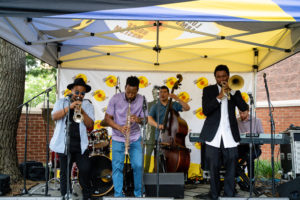
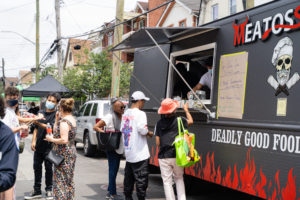
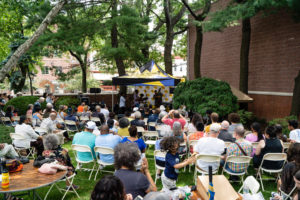
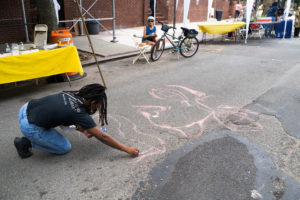
In the oral history interview of Mr. Joseph White, one of the children who grew up on the block and knew the Armstrongs, he told us that Louis Armstrong was part of the community and he was a ‘participant on the block’. The Louis Armstrong House Museum located in the residential neighborhood in Corona Queens, continues to elevate the historic importance of the neighborhood and the people, while continuing to build the inter-generational memory with the current neighbors towards a vibrant and just future.
Drawing directly from Louis and Lucille’s story, the museum is engaged in community programs focusing on housing, home ownership, incarceration and community outreach. The museum’s community programs facilitate dialogue, in partnership with community based organizations, based on the critical elements of Louis and Lucille Armstrong’s story and archives.
Justice Arts
In the legacy of Louis Armstrong incarceration as a young person, The Justice Arts initiative fosters reflection and transformation around the experience of incarceration. The core of the program is an immersive 8-week arts program developed in partnership with Re-entry Theatre of Harlem and community organizations such as Phoenix House and ELMCOR. The program integrates collage, poetry, theatre, mask-making, spoken word, and facilitated discussions that center healing and self-expression, for those returning from incarceration.
In addition, Collaborations with community organizations and the Queens Public Library to curate artistic and educational experiences such as: Performances in correctional facilities, specialized Historic House tours and concerts for justice-impacted youth, collage workshops as a medium for personal storytelling and reclaiming one’s history and imaginations.
Finally, LAHM partners with New Yorkers for Culture and the Arts to convene Justice Arts organizations – those specializing in artistic work with currently incarcerated, formerly incarcerated or youth who are system involved. These online and in-person sessions include resource sharing and advocacy discussions. Interested in being involved? Contact the museum at info@louisarmstronghouse.org and check out our 3-minute video.
Corona Collection of Oral Histories
The Corona Collection of oral histories records and remembers the voices that coexisted with Louis and Lucille Armstrong in their neighborhood. These oral histories and mini-documentaries live within the Armstrong Archives, online, and currently in a special in-person exhibition.
Through ongoing one-on-one interviews and community gatherings and inter-generational workshops, we are actively working to deepen our understanding of the cultural impact of this jazz icon, fostering a connection between past and present. View the developing list of mini-documentaries.
Housing
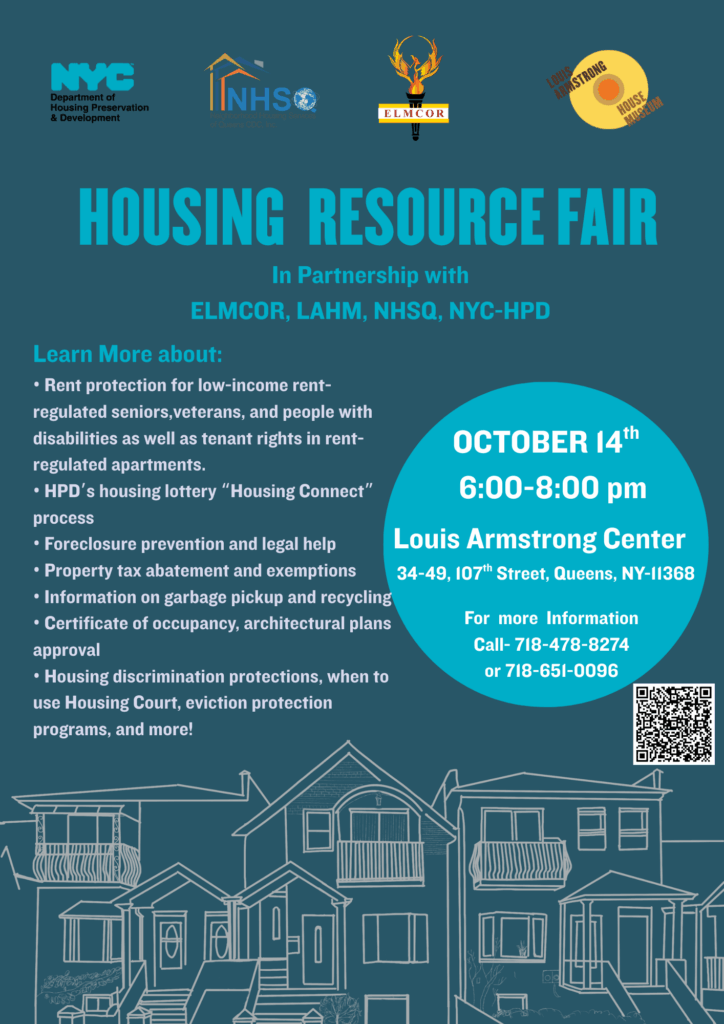
In 1943, Lucille Armstrong purchased the home, which now stands as LAHM’s landmarked historic museum. The research into the archive reveals that as a black woman, Lucille Armstrong could not access public mortgages and it was a challenge to access private mortgage. Yet, she overcame those obstacles, preserved the Armstrong legacy, and had a profound impact on the neighborhood. How does this history inspire and inform those aspiring to buy a home today? The dialogues and events on housing, focus on this question.
Facilitating spaces of reflection and surfacing neighborhood histories is the core of the program. These dialogues and events bring together community organizations, architects, filmmakers, students, and first-time homebuyers to reflect on the history of housing in the neighborhood and access practical strategies on homeownership, affordability and maintenance.
LAHM collaborates with community organizations such as Neighbourhood Housing Services, Queens, Western Queens Community Land Trust and others to look into the questions of home ownership, housing services to first time home buyer program, emergency home repairs, workforce development, affordable housing and tenant services, financial capability and resilience.
Juneteenth
Each year, New York City’s arts and cultural organizations are invited to join together in marking Juneteenth. 1) As a community, we pledge to continue the ongoing work of achieving equity, equality, and justice in our organizations and society. 2) A listing of our public events marking the celebration of Juneteenth will be compiled and shared with media and tourism outlets. Check out the list of events. Interested in planning your event for 2026? Reach out to us at info@louisarmstronghouse.org or through the Culture @3 community and Anti-Racism Working Group.
It’s in Queens!
Check out the weekly column from QEDC to learn about events at Queens Theatre, Queens Museum, Queensboro Dance Festival, Jamaica Center for Learning and the Arts, Lewis Latimer House, Langston Hughes Library, Queens Farm, Queens Botanical Garden and so many more!
Learn More About The Louis Armstrong House Museum
Come to a Concert, Film, or Book Talk
Tour The Armstrong Home in Corona, Queens, New York
Have Your Students Learn Trumpet With Us
Have a Global Adventure
Sign up for the Newsletter
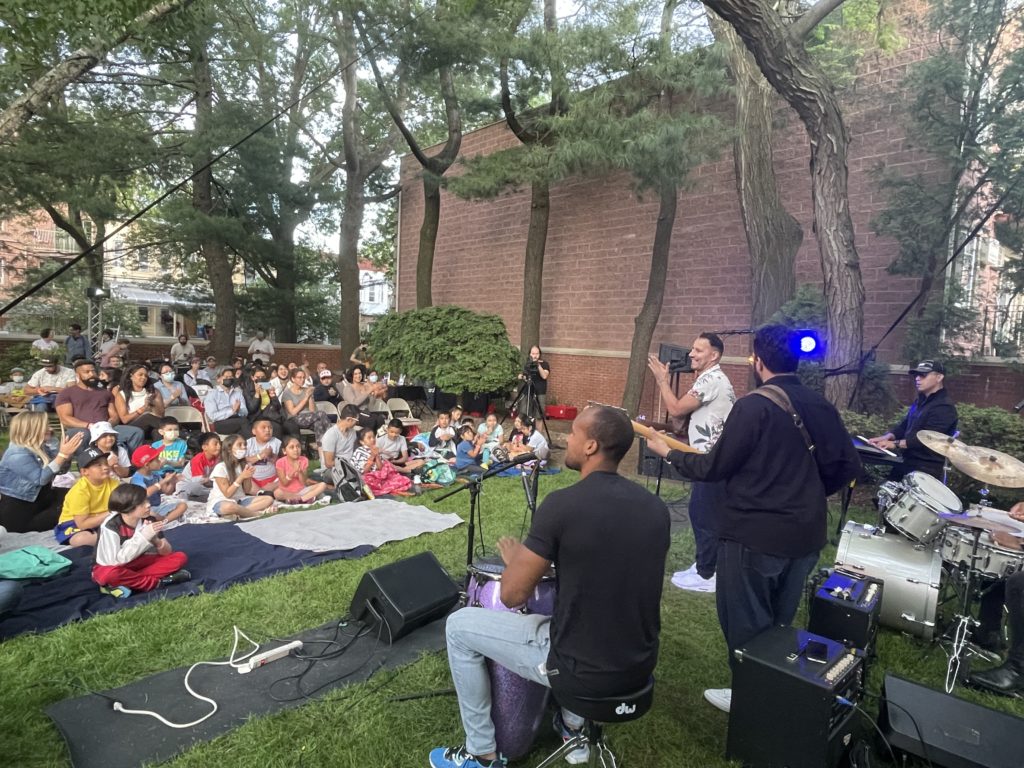
Our Land Acknowledgement: Where do we stand? We are still learning as an organization, but to the best of our knowledge, the Louis Armstrong House Museum stands on the traditional land of the Matinecock People, one of the original tribes of New York, and a people who continue to live and work on this land to this day. We stand in a community that has been home to immigrants from many nations throughout its history and through today. We stand in a community that, in the 1940’s, welcomed two Black artists, at a time when many communities did not. We stand because of the support of community members and leaders who have passed, including Selma Heraldo, Michael Cogswell, Phoebe Jacobs, Stanley Crouch and Jimmy Heath. And we stand in the legacy of both Louis and Lucille Armstrong.